Fabada Asturiana (Slow Cooker Version): The Easiest Way to Make Spain’s Most Comforting Stew
If you’ve ever had fabada asturiana, you already know the vibe — buttery white beans, smoky chorizo and morcilla, and a deep saffron broth that smells like a Spanish mountain village in winter.
Traditionally, fabada is cooked low and slow on the stove, but this version makes it hands-off. The crockpot does the work while your kitchen fills with that rich, cozy aroma of Asturias.
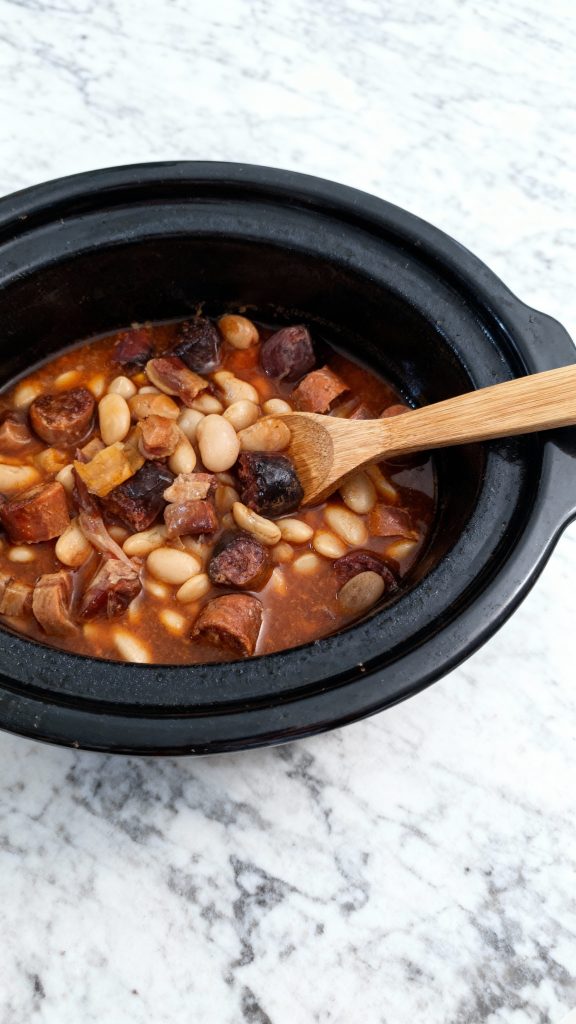
Ingredients
Beans & Base
- 500 g fabes de la Granja — traditional Asturian white beans that turn buttery and delicate when slow-cooked.
Can’t find them? Use large butter beans or cannellini beans instead. They’ll be a little less silky but still great. - 1 small onion, peeled and left whole
- 3 garlic cloves, peeled and lightly crushed
- 2 bay leaves
- A pinch of saffron threads (about ½ teaspoon)
- 1.1–1.3 L hot water (enough to cover beans by 2–3 cm)
- Salt — added only at the end
Meat (Compango)
- 2 Asturian chorizos (~250 g total)
- 2 morcillas (~250 g total)
- 200–250 g panceta curada or lacón (if very salty, soak overnight)
- Optional: 1 tsp sweet smoked paprika (pimentón de la Vera)
Before You Start
- Crockpot size: 5–6 L (5–6 qt) is perfect. If yours is smaller, reduce ingredients by 25%. A Crock-Pot 6-Quart Programmable Slow Cooker works beautifully.
- Water: If you live somewhere with hard or chlorinated water (like southern Spain), use filtered water — it keeps the beans tender.
- No shortcuts: Soaking overnight matters. It’s what keeps the beans creamy, not chalky.
Step 1: Soak the Beans (the Night Before)
Rinse the beans, pick out any broken ones, and cover them with cold water — at least triple their volume. Soak for 12–18 hours.
If you’re using lacón or salty panceta, soak that separately in cold water overnight, changing the water once.
No salt, no baking soda — just water.
Step 2: Morning Prep
- Drain and rinse the beans.
- Bloom your saffron: warm a few tablespoons of water and soak the saffron threads for 10–15 minutes.
- Optional but smart: boil a small pot of water, prick the chorizo and morcilla once, and blanch all the meats (chorizo, morcilla, panceta/lacón) for 2 minutes.
This melts off extra fat and salt so your broth stays silky instead of greasy.
Step 3: Load the Crockpot
- Bottom layer: beans, onion, garlic, and bay leaves.
- Top layer: the meats. Keep morcilla on top — it’s delicate and can burst.
- Liquids: pour in hot water to cover the beans by 2–3 cm. Add the saffron liquid.
- If your meats aren’t very smoky, add 1 teaspoon of pimentón.
- No salt yet. It’ll toughen the beans.
Step 4: Cook Slow and Steady
- Set to LOW for 7–8 hours (best texture) or HIGH for 4–5 hours (if you’re in a hurry).
- You want gentle bubbling, not a rolling boil — boiling splits the skins.
- Don’t stir. Just tilt or swirl the pot once or twice.
- If beans poke above the surface, add a bit of hot water (never cold).
When they’re done, the beans will be soft and buttery, the broth golden, and everything smelling incredible.
Step 5: Finishing Touches
- Salt only now. Taste first — the meats release salt naturally. Add a little, stir gently, taste again.
- For a silkier texture, mash a spoonful of beans and stir them back in.
- Turn the slow cooker off (or to Warm) and let it rest 20–30 minutes before serving. This step thickens and deepens the flavor.
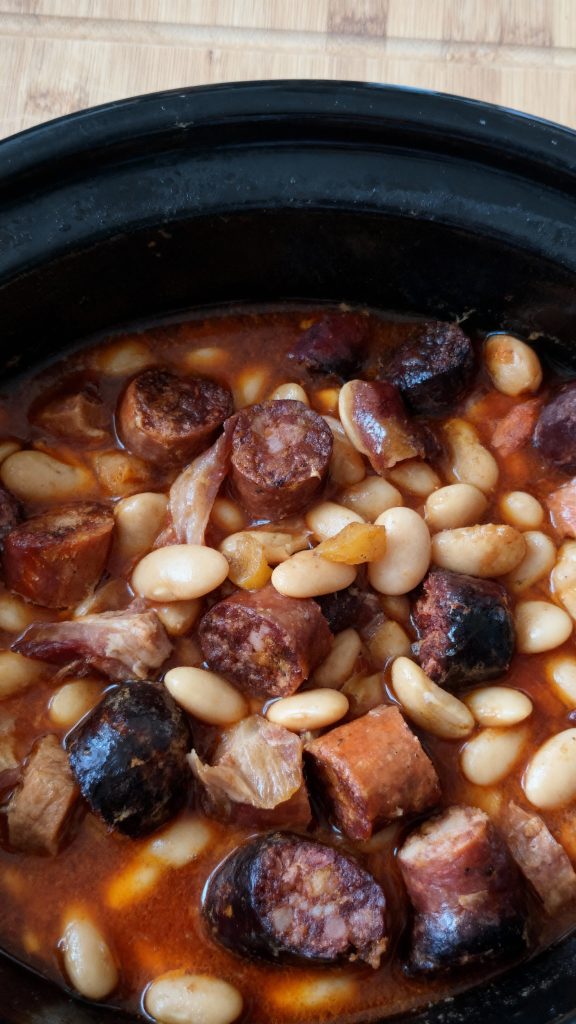
Step 6: Serve Like You Mean It
- Remove the onion, garlic, and bay leaves if you prefer a cleaner bowl.
- Slice the chorizo and morcilla thick. Cut the panceta or lacón into chunky pieces.
- Ladle the beans and broth into bowls and top with the meats.
- Serve with crusty bread — I like La Brea Take-and-Bake Rustic Loaf.
- If you want to go full Asturias, pour yourself a glass of sidra natural.
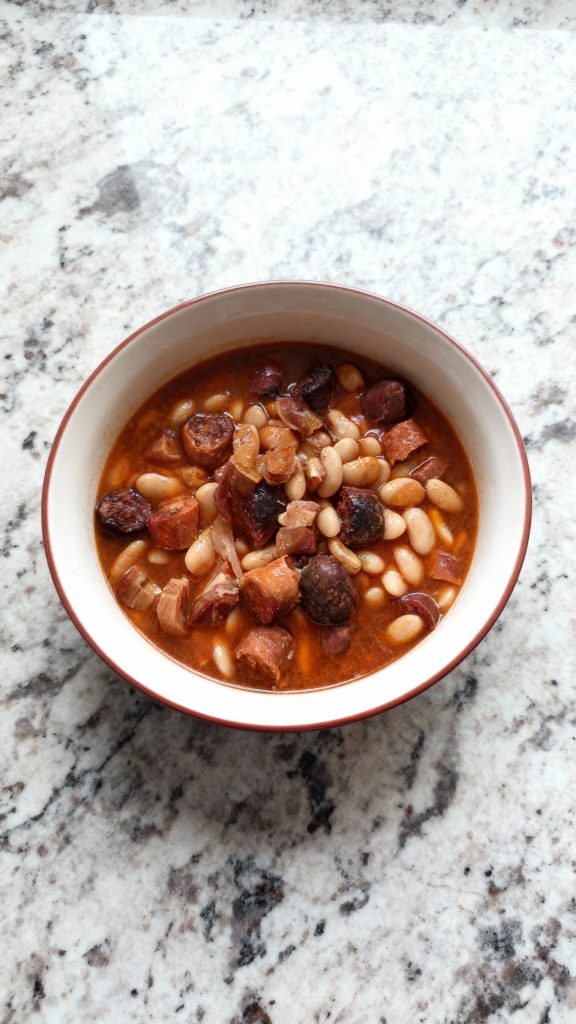
Step 7: Make-Ahead and Storage Tips
- Fabada is even better the next day.
- Cool quickly, refrigerate up to 4 days, or freeze up to 3 months.
- Reheat gently — no boiling, or the beans will split.
- To lighten it, refrigerate overnight and skim the solid fat layer before reheating.
Troubleshooting
- Beans still firm? They’re old or your crockpot runs cool. Keep on LOW longer or switch to HIGH for 45–60 minutes.
- Skins splitting? The pot boiled too hard — keep it barely simmering next time.
- Too salty? Add a little unsalted hot water or a peeled raw potato for 10 minutes, then remove it.
- Too thin? Mash a few beans or cook uncovered for 10–15 minutes.
- Too fatty? Skim or chill overnight and lift off the top fat layer.
- Morcilla exploded? Next time, prick once and keep it on top.
Ingredient Swaps That Still Work
- Beans: Fabes → best. Butter beans → solid backup. Cannellini → acceptable.
- Meats: Can’t find Asturian compango? Try Spanish cooking chorizo, smoked ham hock, or a small piece of salt pork.
- No morcilla? Add a bit of smoked paprika and a small piece of smoked pork for that dark, rich note.
- Want it lighter? Trim fat, blanch meats, and de-fat the stew after chilling.
The Result
After eight hours, you’ll lift the lid to that saffron-gold broth and tender beans that collapse against your spoon. The smoky pork perfumes the whole thing, and the texture is thick, velvety, and pure comfort.
This isn’t “bean soup.” It’s real Asturian soul food — simple ingredients, slow time, no shortcuts.
If you want to make it again (and you will), stock up on the essentials:
That’s pretty much all you need for a lifetime of cold-day dinners that taste like Spain.